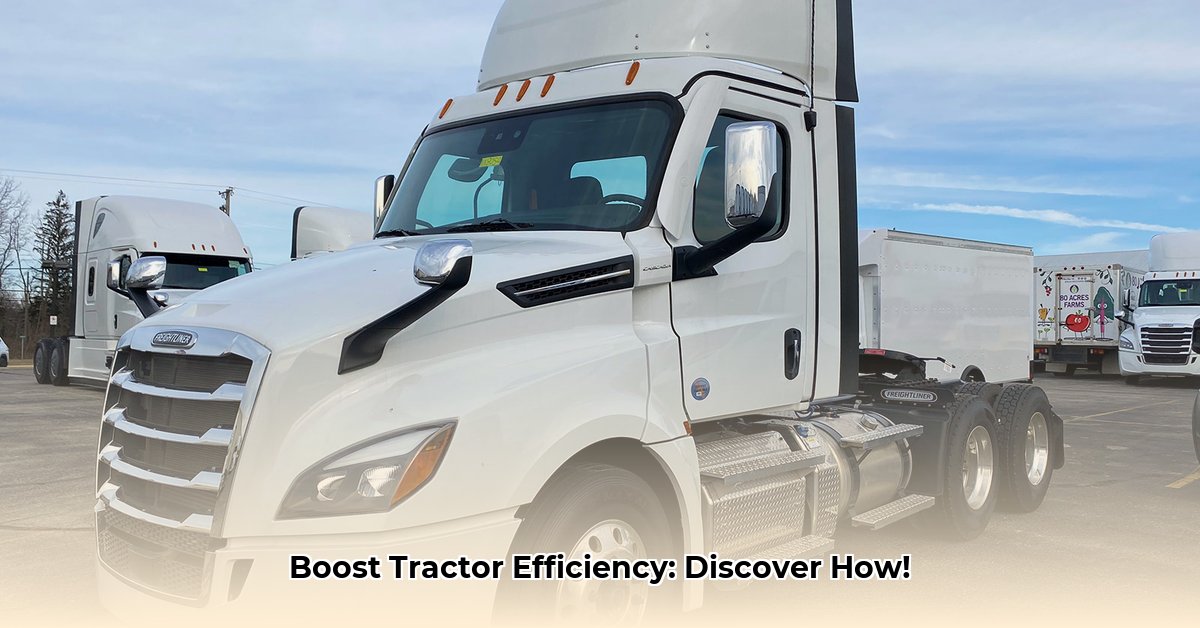
Tractor Day Cab: Boosting Your Efficiency
Mastering the tractor day cab can significantly improve your trucking operation's efficiency. These compact trucks are ideal for regional deliveries and short-haul operations, prioritizing fuel economy and maneuverability over long-distance comfort. This guide will equip you with the knowledge to maximize this versatile vehicle's potential.
Key Features and Specifications of a Tractor Day Cab
A tractor day cab is a specialized vehicle optimized for specific tasks. Unlike sleeper cabs designed for cross-country hauls, these are optimized for shorter trips and quick turnarounds. Their compact size enhances agility in tight spaces, while the design often prioritizes fuel efficiency.
| Feature | Description |
|---|---|
| Engine Type | Typically a smaller, fuel-efficient diesel engine (designed for maximizing miles per gallon). |
| Cab Size | Compact, single-driver design (maximizes space and minimizes unnecessary weight). |
| Safety Features | Standard safety features are included, with many models incorporating advanced driver-assistance systems (ADAS) for enhanced safety. |
| Fuel Efficiency | Expect impressive fuel economy due to the smaller engine, lighter weight, and often, aerodynamic design. |
| Payload Capacity | While not as spacious as larger trucks, the payload capacity is well-suited for shorter-haul requirements. |
| Maneuverability | The smaller size facilitates easy navigation of city streets and tight delivery locations. |
Isn't maximizing fuel efficiency a key concern for every trucking operation? A day cab's design specifically addresses this need.
Operating Your Tractor Day Cab: A Step-by-Step Guide
Driving a tractor day cab is relatively straightforward, similar to driving a car, but with crucial differences. Safety remains paramount.
Step 1: Pre-Trip Inspection (Essential Daily Routine). Before starting the engine, perform a thorough pre-trip inspection. Check fluids (engine oil, coolant, transmission fluid), tire pressure, lights, and the overall condition of the vehicle. This prevents major problems.
Step 2: Starting the Engine. This is typically simple, with most modern trucks using key ignition or push-button start. Refer to your owner's manual for specific instructions.
Step 3: Driving and Maneuvering. Accelerate and brake smoothly. Aggressive driving significantly reduces fuel efficiency. The cab's compact size improves maneuverability in tight spaces, but constant situational awareness is crucial.
Step 4: Shutting Down the Engine. Always follow the manufacturer's recommended procedure. This typically involves a specific sequence to ensure proper system cool-down. Consult your owner's manual.
Did you know that regular pre-trip inspections can prevent up to 80% of roadside breakdowns? Make it a habit.
Maintaining Your Tractor Day Cab: Preventative Care
Regular maintenance is crucial for smooth and efficient operation. Proactive maintenance is far less expensive than major repairs.
- Fluid Levels: Regularly check and maintain correct levels of engine oil, coolant, transmission fluid, and power steering fluid. Low fluids can cause significant engine damage.
- Tire Pressure: Incorrect tire pressure negatively affects fuel efficiency and handling. Maintain proper inflation levels (specified in your owner's manual).
- Brake System Inspection: Regularly inspect brake pads and lines. Brake failure is a serious safety hazard.
- Lights and Signals: Check all lights and signals to ensure correct functionality for enhanced visibility and safety.
- Pre-Trip Inspections: Make this a non-negotiable part of your daily routine. It's your best defense against unexpected breakdowns.
A well-maintained truck translates directly to cost savings and reduced downtime.
Tractor Day Cab vs. Sleeper Cab: A Comparison
Choosing the right truck depends entirely on your specific hauling needs. Day cabs and sleeper cabs offer distinct advantages and disadvantages:
| Feature | Tractor Day Cab | Sleeper Cab |
|---|---|---|
| Cost | Generally lower initial purchase price | Significantly higher initial purchase price |
| Fuel Efficiency | Typically better fuel economy due to lower weight | Lower fuel economy due to increased size and weight |
| Driver Comfort | Suitable for shorter trips; limited long-haul comfort | Designed for longer trips; provides sleeping quarters |
| Ideal Use Cases | Short-haul deliveries; local and regional transport | Long-haul trucking; cross-country shipments |
| Maintenance | Potentially lower maintenance costs | Potentially higher maintenance costs |
Choosing between a day cab and a sleeper cab directly impacts your bottom line.
Choosing the Right Tractor Day Cab
Selecting the ideal tractor day cab involves careful consideration:
- Typical haul length: Local or regional deliveries?
- Cargo type and weight: How much will you haul regularly?
- Budget: Tractor day cabs span a wide price range.
- Desired features: Do you need specific safety features or ADAS?
Consult a trucking equipment dealer for personalized guidance. They can match your needs to the perfect model.
Conclusion: Efficiency Starts with the Right Tool
A tractor day cab can significantly boost your business's efficiency and profitability. Remember that overall efficiency involves more than just the vehicle; strategic route planning, efficient load management, and proactive maintenance are also crucial components of optimized operations. The right truck is the starting point of your journey to greater success.